
A monthly marketing report should help a business decide what to continue, change or stop. Many reports fail because they list activity without explaining commercial impact. A useful report connects marketing work with qualified demand, customer behaviour and the next set of decisions.
This practical framework is designed for growing businesses that need clarity without a complicated reporting operation.
Agree on the purpose and audience
An owner, sales manager and channel specialist need different levels of detail. Define who will read the report, the decisions they own and the questions that recur each month. Keep the executive summary stable while allowing supporting pages to contain channel detail.
Lead with commercial outcomes
Begin with qualified leads, sales opportunities, revenue, bookings or another meaningful outcome. Show target, current result, prior period and a short explanation. Traffic and impressions belong later because they are useful only when connected to audience quality and conversion.
Use a clear measurement hierarchy
Separate outcomes from diagnostic metrics. Outcomes describe what happened; diagnostics help explain why. If enquiries declined, useful diagnostics might include landing-page conversion rate, channel mix, lead response time and service demand.
Add context to every important change
Numbers without context invite weak conclusions. Record promotions, price changes, website releases, tracking updates, stock issues and seasonal events. Compare like with like and note small samples. A percentage can look dramatic even when it represents only a few customers.
Report channel contribution honestly
Explain the attribution method and its limitations. Last-click reporting may undervalue early research channels, while advertising platforms may claim the same conversion. Use consistent rules and reconcile platform data with analytics, CRM and sales information.
Include customer and sales insight
Quantitative data shows patterns; conversations often explain them. Add concise notes about lead quality, common objections, geographic fit, product availability and customer questions. This prevents the marketing team from optimising toward conversions the business does not value.

Turn observations into actions
Every material finding should lead to a decision, investigation or explicit choice to monitor. Record the action, owner, deadline and expected signal. Review last month’s actions before adding new ones so reporting becomes an accountability process rather than a presentation.
Keep the format easy to scan
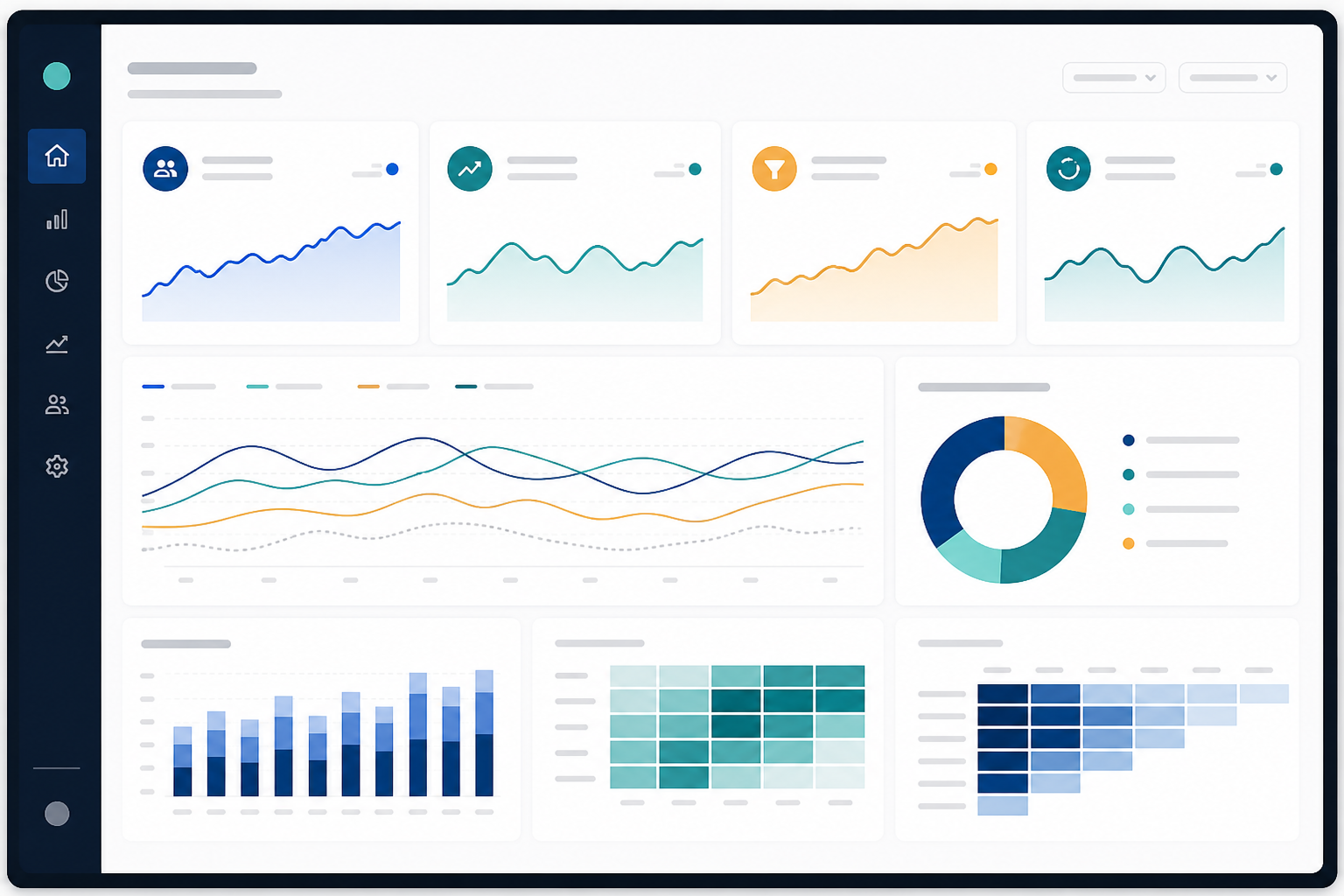
Use a one-page summary with a limited number of charts. Lines show trends, bars compare categories and tables provide exact values. Use consistent colours, labels and date ranges. Remove decorative visuals that do not improve understanding.
A practical monthly structure
- Executive summary and major decisions.
- Commercial outcomes against target.
- Acquisition and conversion performance.
- Channel and campaign diagnosis.
- Customer quality and sales feedback.
- Experiments, risks and next actions.
Questions for the review meeting
- What changed enough to matter?
- What evidence supports our explanation?
- Is the change caused by marketing, operations, demand or tracking?
- What is the smallest useful next action?
- Who owns it and when will we review the result?
A strong monthly marketing report reduces uncertainty. Keep it connected to business outcomes, transparent about limitations and disciplined about follow-through. When the same framework is used consistently, the report becomes part of how the business learns.