
Online reputation management is no longer a task reserved for large brands with public-relations teams. For a small business, reputation is often the bridge between being discovered and being chosen. A prospective customer may compare your website, reviews, social profiles, directory listings and responses before making contact. Each signal helps them decide whether your promises are credible. A strong reputation does not mean collecting perfect ratings or hiding criticism. It means creating dependable customer experiences, listening carefully, responding professionally and making evidence of your quality easy to find.
This practical guide explains how a small business can build an online reputation management system that earns trust without becoming defensive or artificial. It covers monitoring, review generation, complaint handling, brand consistency, team responsibilities and measurement. The objective is a repeatable process that protects relationships and helps the business improve.
Understand what online reputation really includes
Your reputation is the combined impression people form from everything they can see, hear and experience. Reviews are important, but they are only one part of the picture. Search results, business profiles, website accuracy, staff communication, photographs, social comments, news mentions and recommendations all contribute. Offline experiences also travel online when customers discuss them publicly.
Reputation therefore cannot be repaired by marketing alone. If customers repeatedly encounter late delivery, unclear pricing or poor follow-up, polished posts will not solve the underlying problem. Effective online reputation management connects communications with operations. It uses public feedback as evidence, investigates patterns and turns what the business learns into better service.
Establish a trustworthy baseline
Start by searching for the business as a customer would. Use the brand name, common misspellings, key services, staff names and location. Review the first pages of results and note inaccurate information, outdated profiles, duplicate listings, unanswered reviews and images that no longer represent the business. Repeat the exercise on major map, review and social platforms relevant to your market.
Create a simple inventory containing each profile, its owner, login responsibility, current details and last review date. Confirm that the business name, address, telephone number, opening hours and website are consistent. Add clear service descriptions, current photographs and helpful answers to common questions. Accurate profiles reduce customer frustration and give search platforms greater confidence in the information they display.
Define the reputation you want to earn
A business cannot manage its reputation well without deciding what it wants to be known for. Choose three or four qualities that genuinely reflect how you intend to serve customers, such as responsiveness, clarity, specialist knowledge or reliability. Avoid generic claims that every competitor could make. Translate each quality into observable behaviour.
If responsiveness is a priority, define expected reply times and escalation rules. If transparency matters, publish clear explanations of pricing, limitations and next steps. If expertise is central, share useful guidance and explain recommendations in plain language. Reputation becomes stronger when brand promises are supported by consistent actions. These standards also help employees make decisions when a situation is not covered by a script.
Create a simple monitoring routine
Monitoring should be regular enough to catch issues early but focused enough to remain sustainable. Assign a named person to check priority review sites, map listings, social mentions and direct feedback. Daily monitoring may suit a busy consumer business, while a weekly rhythm may be sufficient for a smaller professional service firm. Document who provides cover during holidays.
Classify feedback rather than treating every mention equally. A factual question may need a quick answer. A positive review deserves thanks. A complaint involving safety, privacy, discrimination, legal claims or threats may require immediate escalation. Record the date, channel, issue, owner, response and outcome. This log helps the team identify repeated causes and ensures that important conversations do not disappear inside individual inboxes.
Ask for reviews ethically and consistently
Many satisfied customers never think to leave a review, while disappointed customers often have a stronger reason to speak. A polite request after a genuine transaction helps create a more representative picture. Choose a natural point in the journey: after successful delivery, a completed appointment, a resolved support request or confirmation that the customer is happy.
Keep the request short and make the process easy. Explain that honest feedback helps other customers and helps the business improve. Do not offer rewards for positive ratings, pressure people to change criticism or ask only customers who promise a favourable review. These practices can damage trust and may conflict with platform rules. Never write reviews on behalf of customers. A smaller collection of authentic feedback is more valuable than a suspicious burst of generic praise.
Respond to positive reviews with care
Positive reviews are relationship moments, not merely score improvements. Thank the customer and acknowledge a specific aspect of their experience when appropriate. Keep the response warm and concise. Avoid copying the same template under every review, because repetition makes appreciation feel automated.
Protect privacy even when the reviewer has shared details. Do not confirm confidential information, purchase history, health matters or personal circumstances in a public reply. A safe response can recognise the kind words without repeating sensitive facts. Positive feedback can also reveal what customers value most; note recurring themes and use them to reinforce staff training and service design.
Handle negative reviews without making the problem larger
A critical review can feel personal, especially to an owner who has invested years in the business. Pause before replying. Confirm the facts with relevant staff and records, but do not publish private evidence to win an argument. The public response is read not only by the reviewer but also by future customers assessing how the business behaves under pressure.
A useful response acknowledges the concern, shows a willingness to investigate and offers a private route for resolution. If the business made a mistake, apologise plainly and explain the corrective step without making excuses. If the facts are disputed, remain calm: state that the account does not match your records and invite direct contact. Avoid sarcasm, threats, blame and demands that the review be removed.

Know when to move a conversation offline
Public replies should demonstrate responsibility, not attempt to resolve every detail. Move the conversation to telephone or email when it requires account information, a refund discussion, evidence or extended troubleshooting. Provide a real contact route and identify the team or person who will handle it. A vague instruction to “contact support” can look dismissive.
After resolving the issue, follow up privately and confirm the agreed action. You may politely tell the customer that they are free to update their review if their view has changed, but do not make service, refunds or goodwill conditional on removal. Keep an internal record of the outcome so the lesson can inform future decisions.
Report reviews only for valid reasons
Not every unfair review violates a platform policy. Reporting should be reserved for content that clearly breaches rules, such as spam, impersonation, hate speech, conflicts of interest or reviews unrelated to a genuine experience. Read the platform guidance, document the reason and submit the report through the official process.
While waiting for a decision, write a professional response if appropriate. Do not encourage employees or supporters to attack the reviewer. A calm record can protect credibility even when the content remains visible. If a review includes a serious legal allegation, seek appropriate professional advice before responding publicly.
Turn feedback into operational improvement
Reputation management creates value when feedback changes the business. Review the log monthly and group comments into themes such as communication, waiting time, product quality, billing, delivery or staff behaviour. Separate isolated opinions from repeated patterns. Compare public reviews with complaints, returns, support tickets and customer conversations.
Choose one or two improvements at a time and assign an owner, deadline and measure. A recurring complaint about unclear arrival times might lead to better confirmation messages and proactive delay notifications. A pattern of praise for detailed explanations may become a training standard. When appropriate, communicate improvements publicly without identifying customers. Showing that feedback leads to action can strengthen trust more than claiming perfection.
Build consistent brand signals
Trust weakens when the website promises one experience while profiles, advertisements and staff communications suggest another. Use consistent descriptions, visual identity, tone and service information across channels. Consistency does not mean sounding robotic. It means that customers encounter the same values and essential facts wherever they interact.
Publish content that demonstrates expertise before asking for a sale. Clear guides, case studies, frequently asked questions, process explanations and team profiles help customers evaluate the business. Use real examples only with permission and avoid exaggerated claims. Evidence is more persuasive than superlatives: explain how work is completed, what standards apply and what a customer should expect.

Prepare a reputation response plan
A serious incident requires faster coordination than an ordinary complaint. Create a short plan covering who monitors channels, who verifies facts, who can approve statements and which situations require legal, safety or leadership involvement. Keep current contact details accessible. Staff should know not to speculate publicly or share internal information from personal accounts.
During an incident, communicate only verified facts, acknowledge what is not yet known and provide the next update time where possible. Silence can create a vacuum, but a rushed inaccurate statement can cause lasting harm. Afterward, review what happened, how the response worked and what controls should change. Reputation resilience comes from preparation and honesty.
Measure reputation without obsessing over one score
Average rating is useful but incomplete. Track review volume, recency, response rate, response time and recurring sentiment themes. Compare customer feedback with operational indicators such as repeat business, referrals, complaint resolution and cancellations. A small rating change may be less important than a sudden pattern of comments about the same failure.
Set realistic targets based on controllable behaviour: respond to priority reviews within an agreed period, verify profiles quarterly, request feedback consistently and close the loop on repeated issues. Report context alongside numbers. Reputation is built over many experiences, so trends are more meaningful than daily fluctuations.
Create a sustainable weekly workflow
- Check priority platforms and record new feedback.
- Escalate urgent or sensitive issues immediately.
- Reply to routine reviews in a natural, privacy-aware voice.
- Send ethical review requests at the agreed customer touchpoint.
- Update the issue log and flag repeated themes.
- Confirm that important profile information remains accurate.
Once a month, review patterns with operations and marketing together. Decide which customer-experience change deserves action and which positive themes should be reinforced. This shared ownership prevents reputation from becoming a superficial communications task.
Build trust one experience at a time
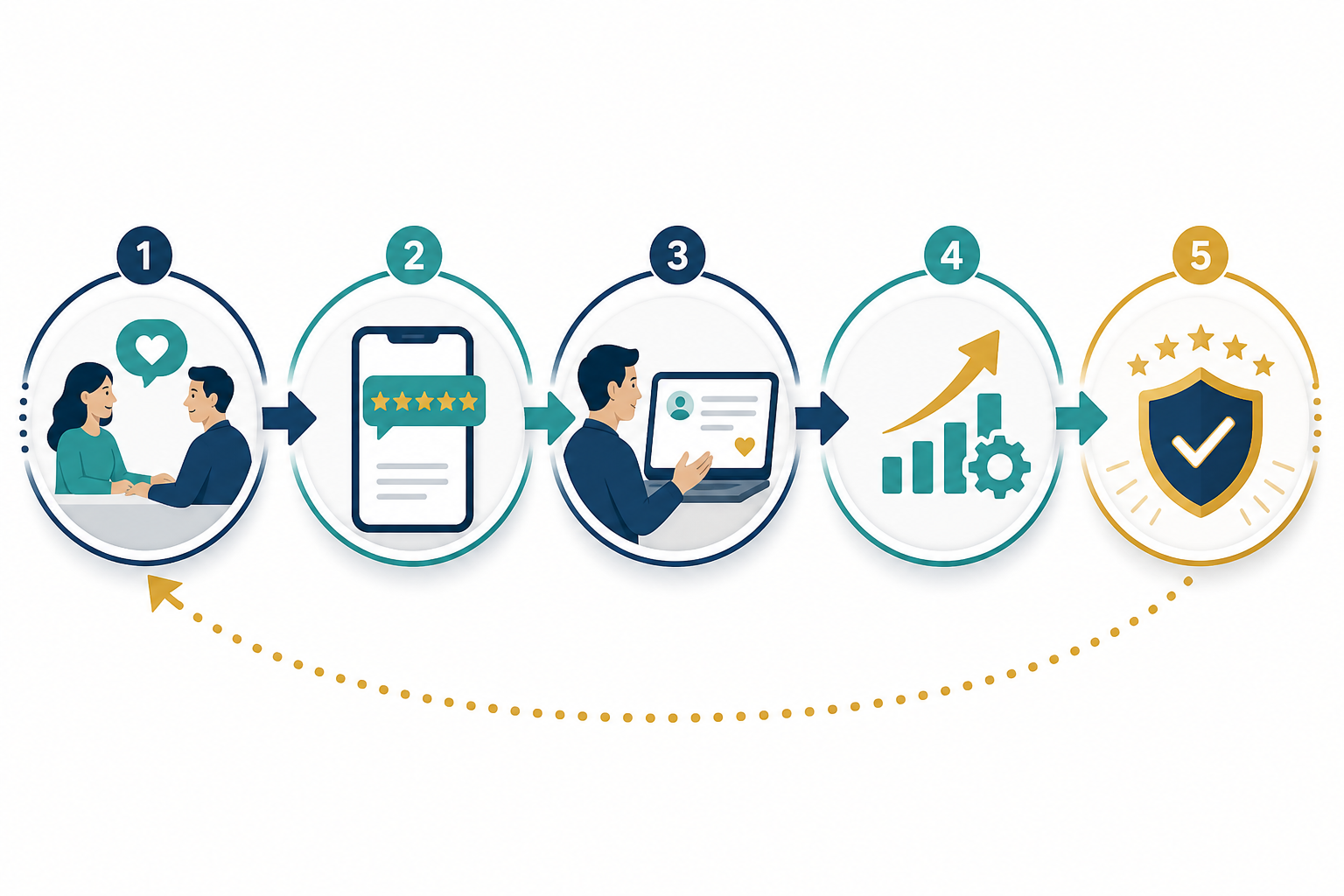
A durable reputation is not manufactured through clever replies. It is earned through reliable service, accurate information, respectful communication and visible improvement. Monitoring helps you hear customers; thoughtful responses show how you behave; operational change proves that listening matters.
Begin with the essentials: audit what customers see, define the standards you want to be known for, assign responsibility and create a simple review-and-response routine. Keep the process human, protect privacy and resist shortcuts that make feedback look manipulated. Over time, those habits create a body of evidence that helps future customers choose with confidence.