
When someone searches for a nearby accountant, dentist, café, plumber, or consultant, they are usually looking for confidence before they are looking for a brand name. They want to know whether the business is real, open, reachable, relevant to the job, and trusted by other people. A well-maintained Google Business Profile can help answer those questions at the moment they matter.
It is not a substitute for a useful website, excellent service, or a sound reputation. It is one part of a local visibility system: accurate business details, helpful service pages, genuine customer feedback, and a site that makes the next step easy. This guide explains how to improve that system without shortcuts, misleading claims, or “set it and forget it” habits.
Start with one accurate, verified business listing
Your first job is simple: make sure the profile represents the actual business that customers can contact or visit. Claim the official listing and complete the verification process available to you. If a listing already exists, work from that record rather than creating a second version just because the first one is incomplete. Duplicate listings can confuse customers and make ongoing management harder.
Use the business name that appears on your real-world signs, documents, and customer communications. Adding strings of locations or services to a name might seem tempting, but it produces a poor customer experience and can create a mismatch with the business people find elsewhere. A local profile should make a business easier to recognise, not try to manipulate a search result.
Choose the primary category with care. It should describe the core service customers would expect from you, not every possible service you could perform. Additional categories can be useful when they genuinely apply, but they should not turn the listing into a catalogue of unrelated keywords. For example, a bakery that also serves coffee may have a clear primary identity as a bakery, while a freelance designer should select a category that matches the work they actively sell.
Make the essential details consistent everywhere
Local customers often compare information across a profile, website, social account, map listing, and a call they make from their phone. A small inconsistency—an old phone number, yesterday’s opening hours, or a missing suite number—can quickly turn into a lost enquiry. Build one accurate record of your name, address, phone number, website address, regular hours, special hours, and service area. Then use it as the reference point whenever you update a public channel.
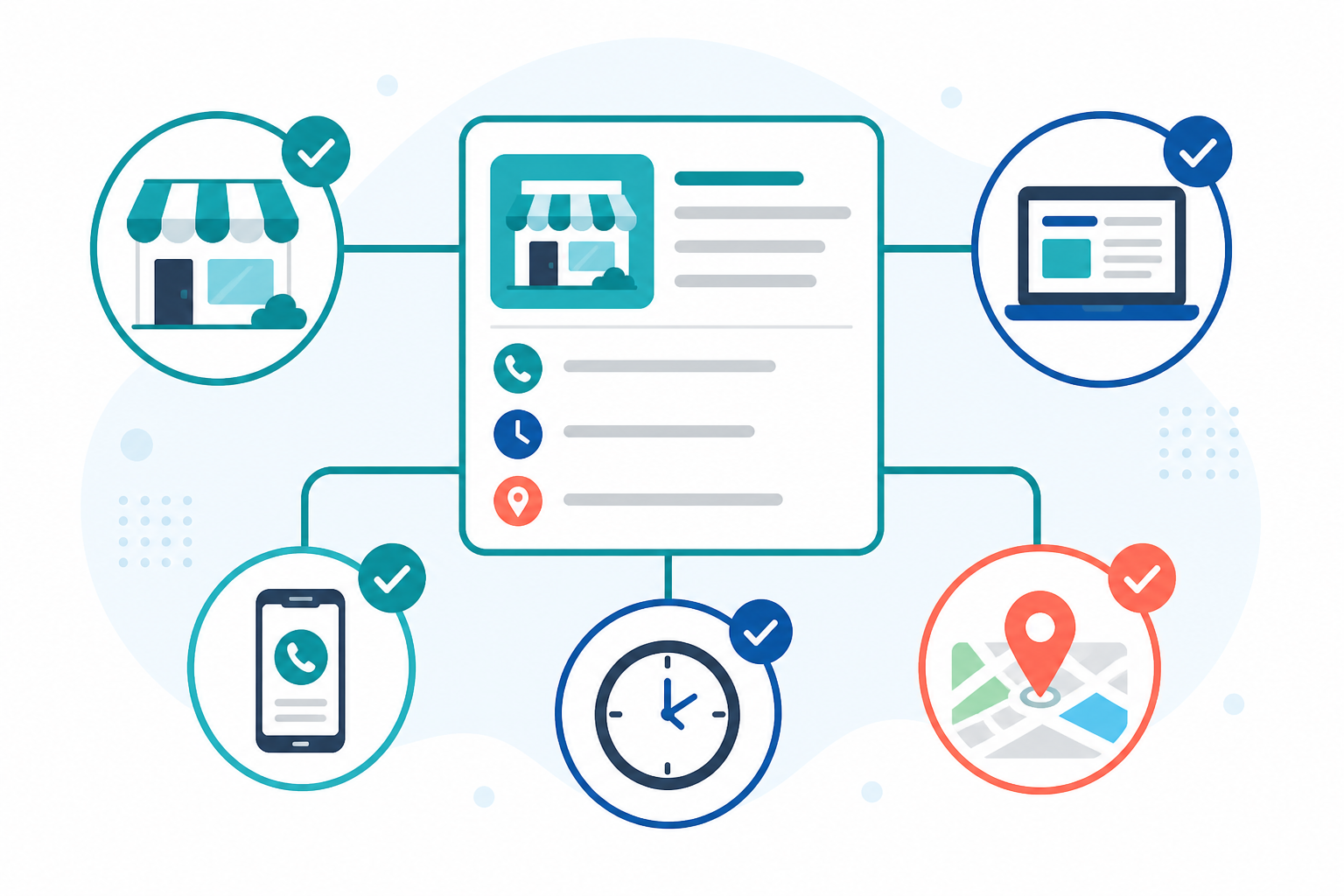
A customer-facing location should show its complete physical address. A service-area business that visits customers should use the profile options that fit that model and avoid presenting a home or virtual office as a public storefront. This is not just an administrative detail. Clear location information helps people understand whether they can visit, call, book, or request an on-site service.
Check opening hours before holidays, seasonal changes, staff training days, and planned closures. A local search result is often a decision tool used minutes before a visit. If a customer drives across town because the profile says you are open, accuracy becomes part of the service itself. Add a direct page on your website for contact details too, so the profile, header, footer, and contact page reinforce one another.
Complete the profile for a real customer, not a ranking checklist
After the fundamentals, fill in the details that help someone decide whether the business is a fit. Write a concise description that explains who you help, what you offer, and what makes the experience useful. Plain language works well. A family-run repair business might mention the types of devices it handles and its booking process. A local marketing studio might explain the kind of teams it works with and the services available.
Add current services or products where those fields suit your business. Use clear, customer-friendly labels, accurate prices or ranges when appropriate, and a logical booking or enquiry path. Do not invent offers simply to cover more searches. Every field should leave the visitor more informed than before.
Photos deserve the same level of care. Use images that show the real premises, team, work, products, or service process. Good lighting and a tidy frame are worthwhile, but authenticity matters more than over-polish. A set of current photographs lets a customer recognise the entrance, see the type of work you do, or get a feel for the environment before they commit. Refresh them after a renovation, a new product launch, a changed sign, or a meaningful shift in the business.
Where features such as booking, messaging, updates, or questions are available in your profile, decide who will monitor them and how quickly they can respond. Availability can vary by business type and region, so it is sensible to check the current guidance in your dashboard rather than promising a feature you cannot support. A neglected conversation channel can create more friction than no channel at all.
Give the profile a genuinely helpful website to point to
A strong local profile should lead to a page that answers the next question. Sending every visitor to a generic home page can work for a very small business, but many customers benefit from a direct route to the relevant service. A local electrician could link to an emergency-callout page; a design agency could link to a service overview; a café could link to its menu or ordering details.
Each important page should explain the service in practical terms, show how to get in touch, work well on a mobile phone, and include the same core identity details used in the profile. Add useful internal links: a service page can point to contact information, related services, and a carefully written about page. Avoid creating a stack of near-identical city pages with only the place name changed. Pages should earn their existence by helping people in that area understand availability, process, proof of work, travel boundaries, or local context.
For a new site, start smaller and make it stronger. One detailed service page with sensible headings, answers to common questions, and a visible contact action is more valuable than ten thin pages written around place-name variations. The goal is a business website a customer would trust after clicking from a map result.
Build reviews through service, not pressure
Reviews are powerful because they give future customers a glimpse of other people’s experience. The healthiest approach is to ask genuine customers for an honest review after a real interaction. Make the request easy, polite, and optional. A short follow-up message, a receipt note, or a conversation at the end of a successful job can be enough.

Do not buy reviews, offer rewards only for positive feedback, ask friends who were not customers to post, or filter requests so that only happy people are invited to comment. Those tactics weaken trust and may conflict with platform rules. Instead, improve the customer experience that produces reviews naturally: arrive when promised, explain pricing, communicate delays, finish well, and make it easy to ask a follow-up question.
Reply to feedback with the same care you would use at the front desk. Thank people for specific praise without revealing private information. If someone raises a problem, acknowledge it, keep the response calm, and offer an appropriate way to continue the conversation privately. A measured response cannot erase a bad experience, but it shows future readers that the business takes responsibility seriously.
Create local relevance with useful evidence
Local relevance is not about repeating a town name in every sentence. It comes from running a real business in an area and publishing information that supports local customers. That might include an explanation of your service area, a case study shared with permission, a seasonal guide that affects your customers, an event update, or photographs from completed work. The content should still be useful if a reader never sees a search engine.
Think about the questions your team hears on calls. Do customers ask whether you travel to nearby suburbs? Whether parking is available? Whether an appointment is needed? Whether you work with homes, commercial sites, or both? These are ideal subjects for clear site copy or a frequently asked questions section. Written answers can reduce repetitive enquiries while helping prospective customers arrive better prepared.
Be precise about claims. If you say “same-day service,” explain the conditions. If you serve a wide radius, state where it applies. If you display awards or memberships, make sure they are current. Local marketing has a long memory because people can compare a profile with their lived experience. Accuracy is more persuasive than superlatives.
Measure actions, then improve the weak point
It is easy to check a profile every day and focus only on where it appears in a search result. That view is too narrow. The better question is whether the right people are taking meaningful next steps: calling, requesting directions, visiting a relevant page, booking, or sending a well-qualified enquiry.
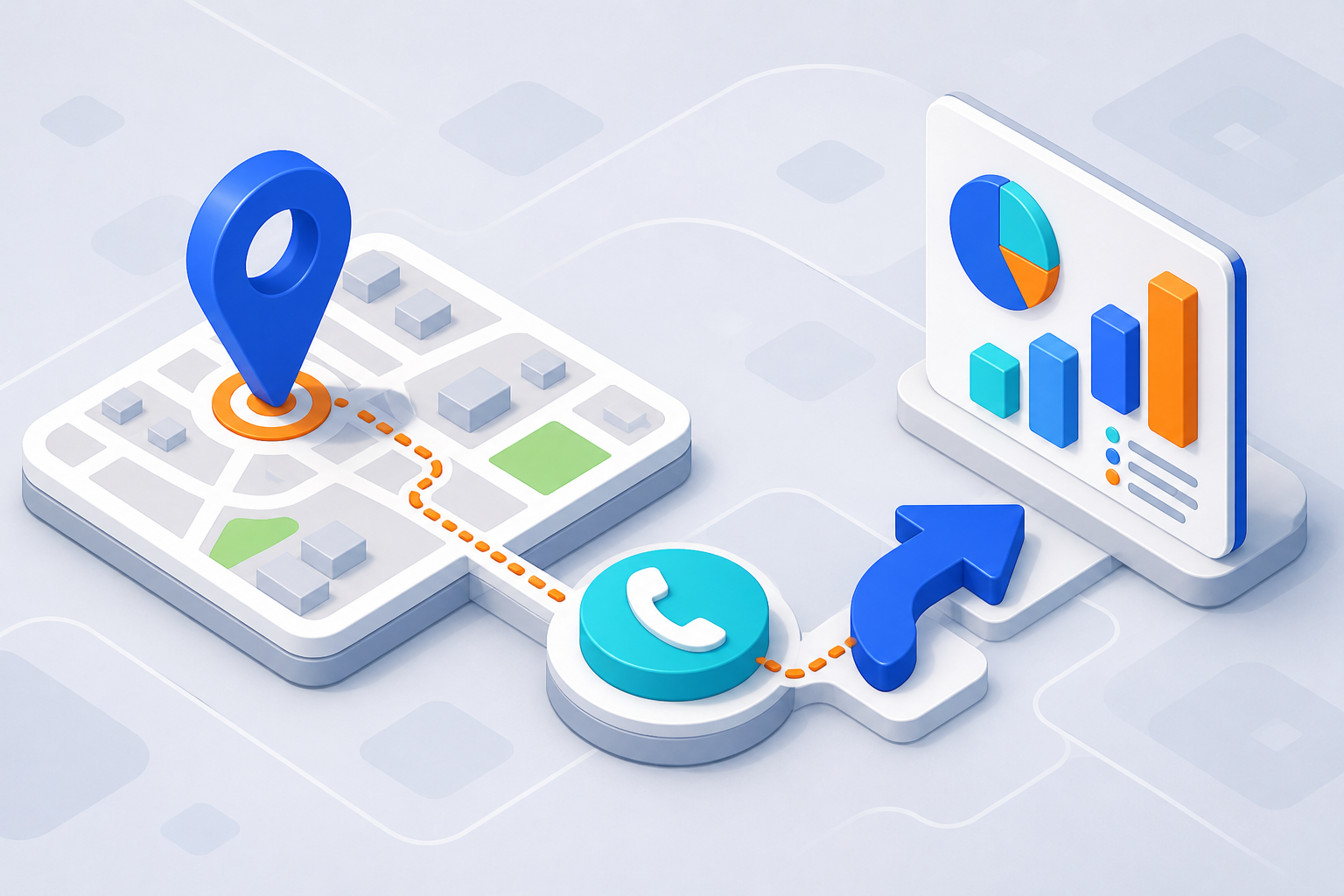
Review the insights available in the profile and pair them with website data. Search Console can show the queries and pages bringing people to the site, while web analytics can help you understand what visitors do after arrival. If many people visit a service page but few contact you, the page may need a clearer call to action, better proof, or simpler pricing information. If direction requests fall after a move, check the address, map placement, photos, and special hours.
Keep a small monthly record rather than relying on memory. Note profile edits, new photos, review themes, enquiries, calls, key website pages, and seasonal changes. Over a few months, this makes patterns easier to spot. It also stops you from changing ten things at once and then guessing which change mattered.
A practical 30-day improvement plan
Week one: claim or verify the right listing, remove duplicate information where possible, confirm the name, address, phone number, website, category, hours, special hours, and service area. Make the same corrections on your site.
Week two: write or refine the business description, review services and products, add a small set of real current photographs, and make sure the website destination answers the visitor’s likely next question.
Week three: create a simple, ethical process for inviting genuine customers to leave an honest review. Read existing feedback, respond to any unanswered comments, and identify recurring service questions that deserve a clearer website answer.
Week four: review calls, directions, website visits, and enquiries. Add one genuinely useful local update or improve one service page. Record what changed, then choose the next small improvement from evidence rather than guessing.
Keep the profile useful over time
Google Business Profile optimisation is not a one-time project. Treat it as part of normal business operations. Assign ownership, set a calendar reminder to review the details monthly, and update it immediately when customer-facing facts change. That routine protects trust and gives your website, reputation, and local discovery efforts a consistent foundation.
If you need help making your local information clearer across your website and customer touchpoints, visit our contact page. Start with truthful details and a better customer experience; the strongest local visibility is built from both.