
Customer reviews can reduce uncertainty for future buyers and reveal where a business needs to improve. An ethical strategy earns feedback through good service and fair requests rather than incentives, pressure or selective manipulation.
This guide provides a practical framework for an ethical customer review strategy. It is designed for growing businesses that need clear priorities, repeatable processes and evidence they can use.
Start with the customer experience
Review generation cannot compensate for unreliable delivery. Map the moments that shape satisfaction and fix recurring friction before increasing request volume.
Turn this principle into a documented routine: define the owner, the evidence to review and the action that should follow. Keep the process proportionate to the size of the business and revisit it when customer behaviour or commercial priorities change.
Choose appropriate request moments
Ask after the customer has received value, completed a milestone or had a problem resolved. The right moment depends on the service and relationship.
Turn this principle into a documented routine: define the owner, the evidence to review and the action that should follow. Keep the process proportionate to the size of the business and revisit it when customer behaviour or commercial priorities change.
Make the request simple and neutral
Explain that honest feedback is welcome and provide a direct route to the relevant platform. Do not suggest the rating or imply that only positive reviews are wanted.
Turn this principle into a documented routine: define the owner, the evidence to review and the action that should follow. Keep the process proportionate to the size of the business and revisit it when customer behaviour or commercial priorities change.
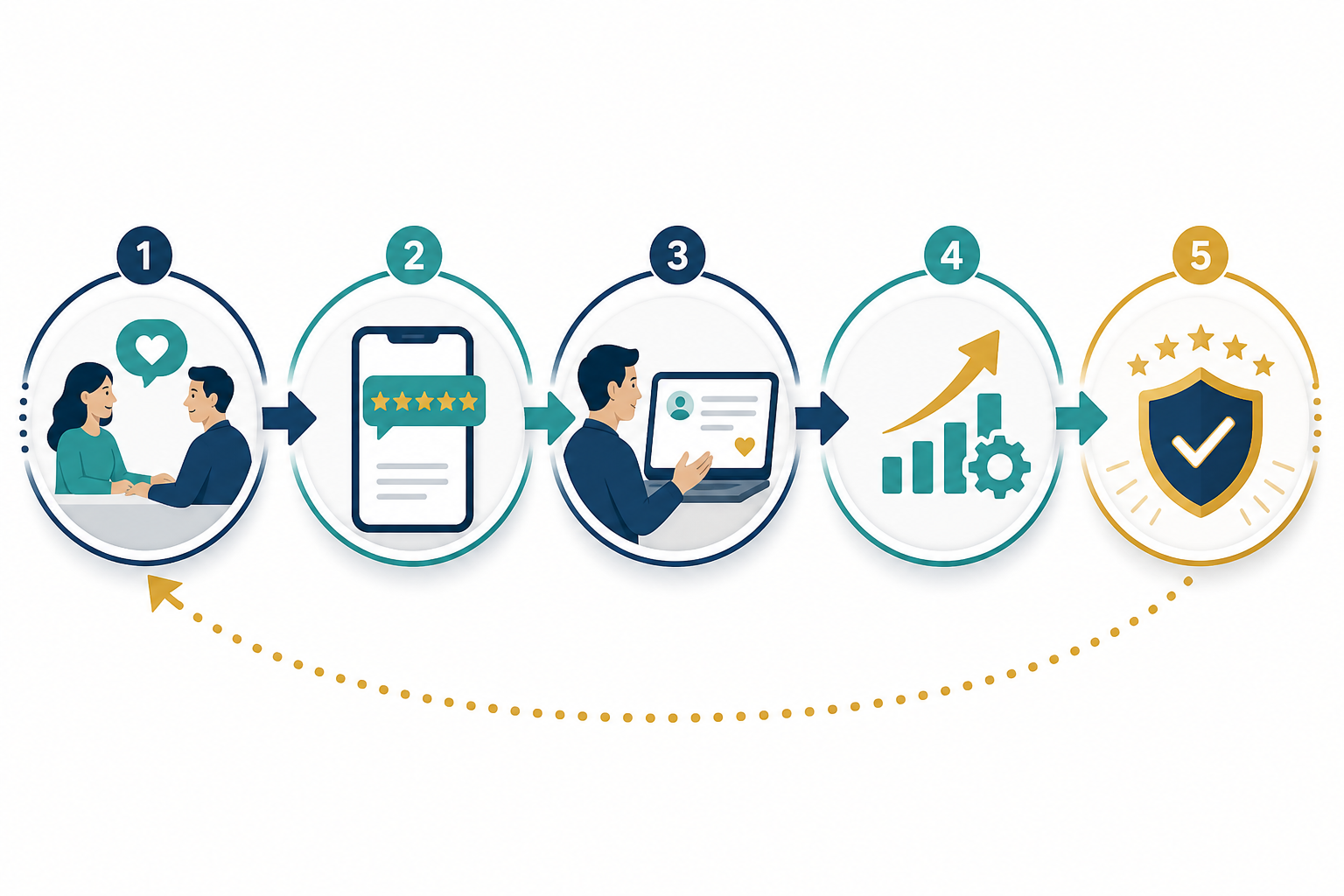
Follow platform rules
Policies differ on incentives, review gating and staff behaviour. Use a process that complies with the platform and applies fairly to customers.
Turn this principle into a documented routine: define the owner, the evidence to review and the action that should follow. Keep the process proportionate to the size of the business and revisit it when customer behaviour or commercial priorities change.
Respond to positive and critical reviews
Appreciate specific feedback, acknowledge concerns and explain a reasonable next step. Avoid sharing private information or debating the reviewer’s character.
Turn this principle into a documented routine: define the owner, the evidence to review and the action that should follow. Keep the process proportionate to the size of the business and revisit it when customer behaviour or commercial priorities change.
Learn from review themes
Tag feedback by service area, communication, value and outcome. Share recurring issues with operational owners and record the improvement made.
Turn this principle into a documented routine: define the owner, the evidence to review and the action that should follow. Keep the process proportionate to the size of the business and revisit it when customer behaviour or commercial priorities change.

Measure quality, not only quantity
Track participation, response time, theme trends and trust indicators. A smaller collection of credible, detailed reviews is often more useful than rapid, suspicious growth.
Turn this principle into a documented routine: define the owner, the evidence to review and the action that should follow. Keep the process proportionate to the size of the business and revisit it when customer behaviour or commercial priorities change.
Practical checklist
- Request honest feedback without pressure.
- Never buy or fabricate reviews.
- Avoid review gating.
- Use criticism to improve operations.
An ethical review strategy is a customer-listening system. When requests are fair and responses are respectful, reviews strengthen trust while helping the business improve.