
Online reputation monitoring helps a business notice customer concerns, inaccurate information and emerging trust signals before they become larger problems. The aim is not to control every opinion; it is to listen consistently and respond with evidence and care.
This guide provides a practical framework for online reputation monitoring. It is designed for growing businesses that need clear priorities, repeatable processes and evidence they can use.
Map the places reputation appears
List review platforms, social channels, search results, directories, forums and industry sites that customers may consult before contacting the business.
Turn this principle into a documented routine: define the owner, the evidence to review and the action that should follow. Keep the process proportionate to the size of the business and revisit it when customer behaviour or commercial priorities change.
Prioritise signals by impact
A new review on a major profile may deserve faster attention than a low-visibility mention. Define priority based on reach, credibility and customer risk.
Turn this principle into a documented routine: define the owner, the evidence to review and the action that should follow. Keep the process proportionate to the size of the business and revisit it when customer behaviour or commercial priorities change.
Set up a monitoring rhythm
Use platform alerts where available and assign daily, weekly and monthly checks. Record who owns each channel so important mentions are not assumed to be someone else’s job.
Turn this principle into a documented routine: define the owner, the evidence to review and the action that should follow. Keep the process proportionate to the size of the business and revisit it when customer behaviour or commercial priorities change.
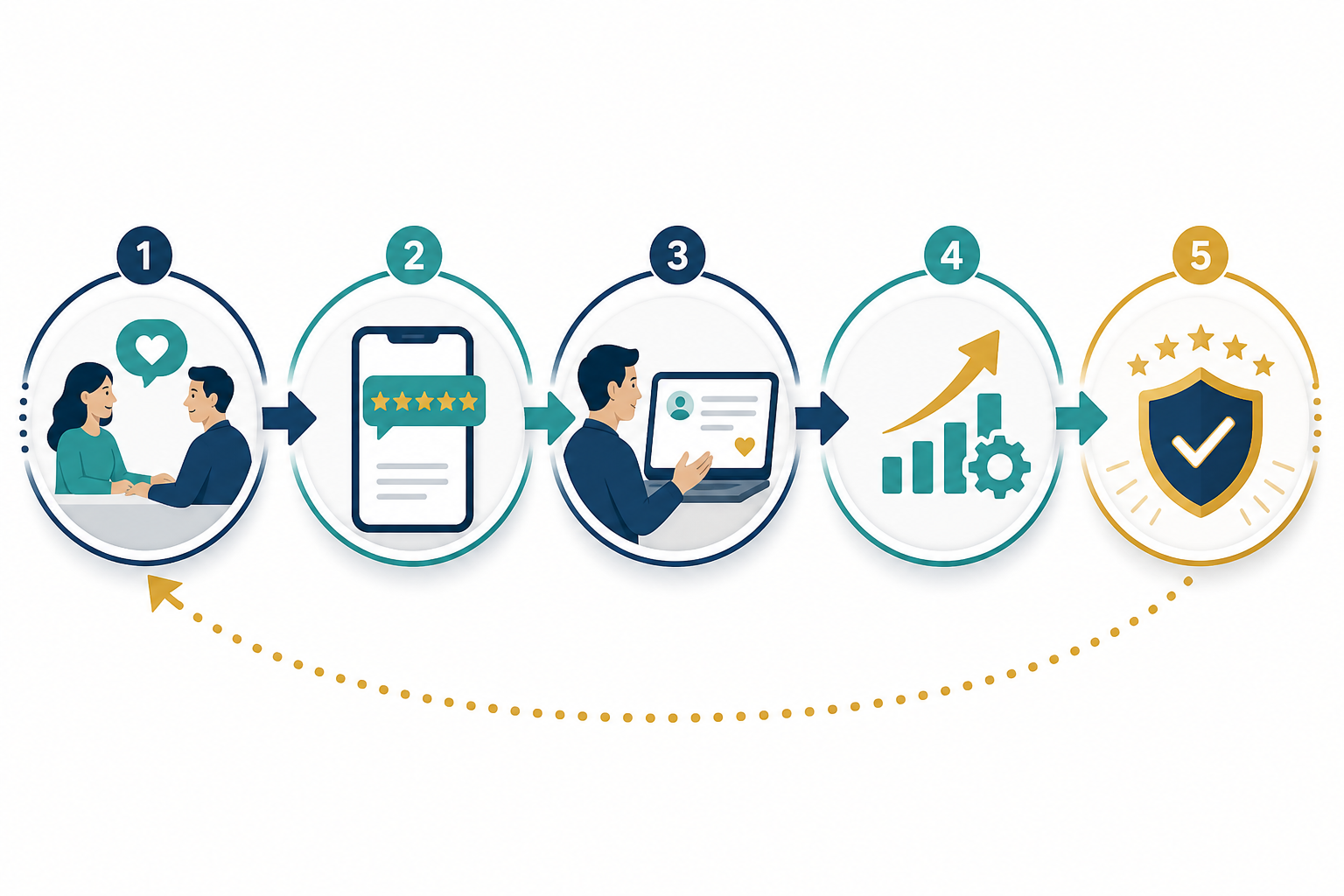
Classify mentions consistently
Group feedback by topic, sentiment, urgency and business area. Consistent classification reveals patterns that individual responses can hide.
Turn this principle into a documented routine: define the owner, the evidence to review and the action that should follow. Keep the process proportionate to the size of the business and revisit it when customer behaviour or commercial priorities change.
Respond with a clear policy
Thank positive reviewers, acknowledge concerns and avoid arguing. Move private details to an appropriate channel while keeping the public response helpful and professional.
Turn this principle into a documented routine: define the owner, the evidence to review and the action that should follow. Keep the process proportionate to the size of the business and revisit it when customer behaviour or commercial priorities change.
Connect reputation with operations
Recurring complaints often point to delivery, communication or expectation gaps. Share themes with the teams able to fix the underlying experience.
Turn this principle into a documented routine: define the owner, the evidence to review and the action that should follow. Keep the process proportionate to the size of the business and revisit it when customer behaviour or commercial priorities change.

Report trends without vanity metrics
Track response time, rating distribution, recurring themes and resolution signals. The purpose is improved trust and service, not simply a larger volume of mentions.
Turn this principle into a documented routine: define the owner, the evidence to review and the action that should follow. Keep the process proportionate to the size of the business and revisit it when customer behaviour or commercial priorities change.
Practical checklist
- List priority platforms and owners.
- Create response-time targets.
- Protect customer privacy in public replies.
- Escalate legal, safety or sensitive issues appropriately.
A useful monitoring system combines technology with judgement. Listen broadly, prioritise carefully and use feedback to improve the experience that creates the reputation.