
Local customers rarely begin with a brand name. They search for a service, compare nearby options, read a few reviews, and choose the business that appears credible and convenient. That makes local SEO for small businesses one of the most practical ways to turn online visibility into phone calls, bookings, store visits, and qualified leads.
Local search is not a single tactic. It is a connected system built from accurate business information, a useful website, a complete business profile, trustworthy reviews, relevant local content, and consistent signals across the web. When these elements support one another, search engines can understand what you offer, where you operate, and why a nearby customer should consider you.
This guide explains how to build that system step by step. It focuses on sustainable work that helps real customers, rather than shortcuts that may create a temporary ranking spike but weaken trust over time.
What Local SEO Really Means
Local SEO is the process of improving a business’s visibility when people search for products or services in a specific area. These searches may include a city, neighborhood, or phrase such as “near me,” but many have local intent even when no location is written. A search engine can often infer location from the device, search history, and context.
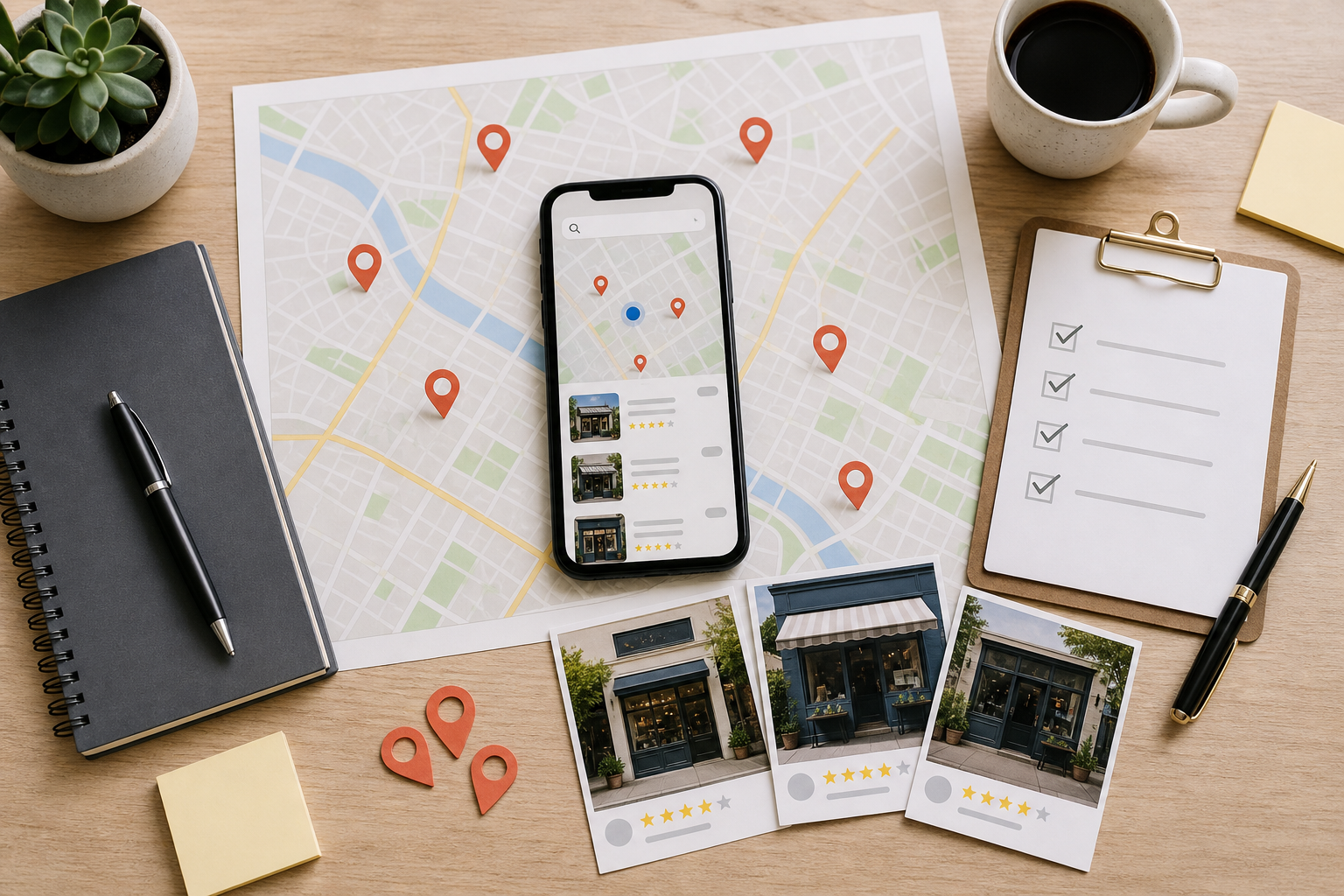
Local results usually appear in two places: the map-based results and the traditional organic listings below them. A strong strategy addresses both. Your business profile helps you compete in map results, while your website provides depth, relevance, and authority. Reviews, citations, links, and customer behavior reinforce the relationship between the two.
How Local Search Rankings Are Determined
Although ranking systems are complex, most local visibility can be understood through three broad ideas: relevance, distance, and prominence.
Relevance
Relevance measures how closely a business matches what the searcher needs. Clear categories, services, website copy, page titles, and business-profile information help establish that match. A plumber who describes emergency repairs, drain cleaning, water-heater installation, and the areas served gives search engines more useful context than a business with only a vague homepage.
Distance
Distance reflects how close the business is to the searcher or the location mentioned in the query. You cannot optimize your way around geography. You can, however, make your genuine service area unambiguous and create useful pages for locations where you actually work. Avoid pretending to have offices that do not exist; inaccurate locations create customer frustration and platform-policy risks.
Prominence
Prominence represents how established and trusted the business appears. Reviews, local links, media coverage, directory mentions, brand searches, and a well-maintained website can all contribute. Prominence grows through consistent service and community presence, so it is usually earned rather than manufactured.
Start With a Local SEO Audit
Before changing anything, document the current position. Search for your main services from the target area, review the business profile, and inspect the most important pages on your website. Record rankings, profile views, calls, form submissions, and other baseline metrics so later improvements can be measured.
Check whether the business name, address, and phone number are correct everywhere customers encounter them. Look for duplicate listings, old phone numbers, outdated opening hours, broken contact forms, thin service pages, and slow mobile performance. Also review competitors that consistently appear for valuable searches. The goal is not to copy them; it is to understand what local customers expect and where your experience can be more useful.
Optimize Your Google Business Profile
A complete business profile is often the most visible part of a local brand. Claim and verify the profile, then fill every relevant field accurately. Use the real-world business name rather than adding keywords that are not part of it. Select the most precise primary category, add appropriate secondary categories, list services or products, and write a straightforward description.
Opening hours deserve special attention. Keep regular and holiday hours current so customers do not make a wasted journey. Add the correct website link, appointment URL, phone number, attributes, and service areas. Upload authentic photographs of the exterior, interior, team, work, and products. Real images help people recognize the location and decide whether the business feels right for them.

Maintain the profile instead of treating setup as a one-time project. Publish useful updates when appropriate, answer questions, add recent photos, and monitor suggested edits. Review performance data monthly, but connect profile activity to meaningful outcomes such as calls, bookings, directions, and revenue.
Build Location-Relevant Website Pages
Your website should confirm and expand on the promise made in search results. Every core service needs a clear page that explains the problem, process, benefits, proof, pricing approach where possible, and next step. Include the city or service area naturally in titles, headings, copy, image alt text, and metadata when it helps describe the page. Repeating a location unnaturally in every sentence makes the page less useful and is unnecessary.
If the company serves several distinct areas, location pages can be valuable when each page contains genuinely specific information. Mention local service details, travel or coverage considerations, relevant projects, testimonials from that area, and a clear contact route. Do not create dozens of nearly identical pages with only the city name changed. Those pages add little value and can dilute the overall site.
Make contact information easy to find. A mobile visitor should be able to call, request a quote, get directions, or book without hunting through menus. Embed a map where it is helpful, show genuine address details, and include service hours. Consistency between the website and business profile reduces ambiguity for both customers and search engines.
Improve On-Page SEO Without Keyword Stuffing
Choose one main search intent for each page. The title should communicate the service and location clearly, while the meta description should give a compelling reason to click. Use one descriptive H1, organize supporting sections with H2 and H3 headings, and answer the questions a customer is likely to ask before contacting the business.
Internal links help visitors and crawlers discover related information. A location page might link to individual services, a relevant case study, financing information, and the contact page. Service pages can link back to the areas served. Use anchor text that describes the destination rather than generic phrases such as “click here.”
Images should be compressed, correctly sized, and described with meaningful alt text. Improve page speed by reducing oversized media, unnecessary scripts, and heavy plugins. Test important pages on a phone. Local searches are frequently made in urgent, mobile situations, so clarity and speed directly affect conversion.
Create Content Around Local Customer Questions
Local content works best when it reflects real conversations. Ask sales and service teams which questions customers repeat. A roofing company might explain storm damage common to the region; an accountant could publish a guide to local filing requirements; a restaurant could introduce seasonal ingredients sourced nearby.
Useful formats include neighborhood guides, project stories, comparison articles, event resources, maintenance checklists, and answers to location-specific concerns. Each article should have a clear purpose and connect naturally to a relevant service. Publishing five genuinely helpful pieces is more valuable than producing fifty shallow pages created only to capture keyword variations.
Earn and Manage Customer Reviews
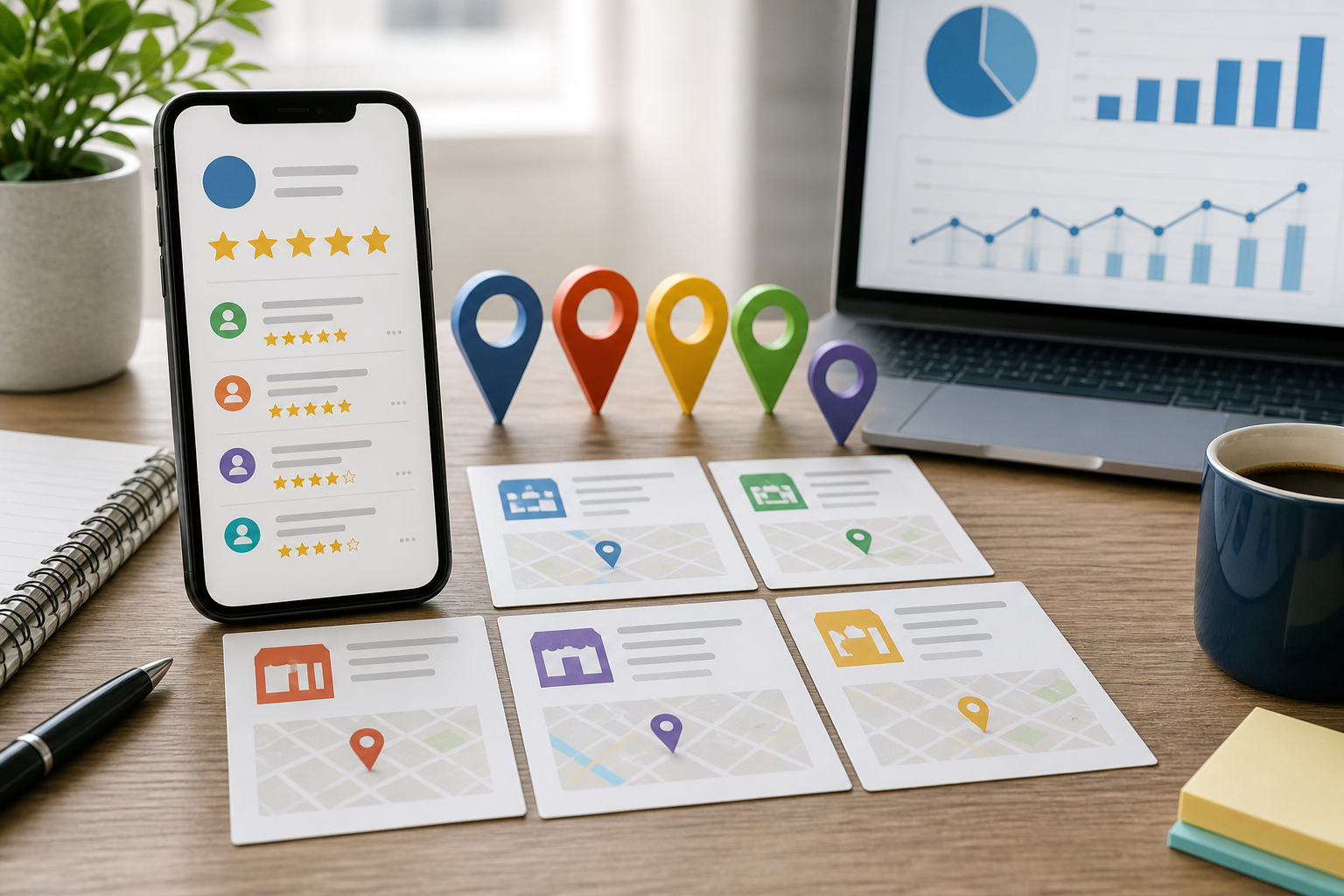
Reviews influence confidence before a customer visits your website. Build a simple, ethical request process after a completed purchase or successful service interaction. Send a direct review link by email or text, train staff to ask consistently, and make participation optional. Never offer rewards only for positive feedback or discourage dissatisfied customers from sharing their experience.
Respond to both positive and negative reviews. A good response is brief, personal, and professional. Thank happy customers without copying the same sentence every time. When criticism appears, acknowledge the concern, avoid discussing private details, and invite the person to continue the conversation offline. Thoughtful replies show future customers how the business handles responsibility.
Keep Local Citations Consistent
A citation is an online mention of the business, commonly including its name, address, and phone number. Important sources may include major maps, industry directories, chambers of commerce, professional associations, and respected local publications. Quality matters more than being listed on hundreds of low-value directories.
Create a master record of the official business details and use it whenever a new profile is built. If the business moves or changes phone numbers, update priority platforms promptly. Minor formatting differences are usually less important than factual contradictions, but clear consistency prevents customers from calling an old number or visiting a former address.
Build Genuine Local Authority
Local links are strongest when they grow from genuine relationships. Sponsor a relevant community event, contribute expertise to a local publication, join a business association, collaborate with a neighboring organization, or publish original local research. These activities can create referral traffic and recognition even before their search benefit is considered.
Avoid bulk link packages, private networks, and irrelevant directory submissions. They may create a large report, but they rarely create meaningful local trust. A handful of editorially earned mentions from organizations people in the area recognize can be far more valuable.
Use Structured Data and Technical Foundations
LocalBusiness structured data can help search engines interpret key information such as business type, address, telephone number, opening hours, and website. It should match visible page content and verified business details. Structured data supports understanding; it does not replace a strong profile, useful pages, or trusted reputation.
Technical basics still matter. Use HTTPS, maintain clean navigation, submit an XML sitemap, fix broken links, and ensure important pages can be indexed. Keep the design accessible and readable. If several locations exist, give each legitimate branch its own page with unique details and connect the site structure logically.
Measure Results That Matter
Rankings are useful diagnostics, but they are not the final business outcome. Track organic and map visibility alongside calls, direction requests, appointment bookings, form submissions, qualified leads, and sales. Use tagged website links in business profiles when possible so analytics can distinguish local listing traffic.
Review performance by service and location. A page may attract traffic but fail to convert because its offer is unclear. Another may rank for fewer searches yet produce valuable calls. Look for trends across several months rather than reacting to daily movement. Local demand, weather, holidays, and competitors can all create short-term fluctuations.
A Practical 90-Day Local SEO Plan
Days 1–30: Fix the foundation
Audit the website and business listings, correct essential contact information, complete the primary business profile, choose priority services, and establish conversion tracking. Improve the homepage and highest-value service page first. Resolve obvious mobile usability and speed issues.
Days 31–60: Strengthen relevance and trust
Create or improve service and location pages, request reviews through a consistent process, respond to existing feedback, and update major citations. Publish one strong local resource based on a real customer question. Add useful internal links and fresh original photographs.
Days 61–90: Build authority and refine
Develop relationships with relevant local organizations, pursue legitimate coverage or partnership opportunities, and review performance data. Improve pages that receive impressions but few clicks, and clarify calls to action on pages that attract visitors without generating leads. Turn the most effective activities into a repeatable monthly routine.
Common Local SEO Mistakes to Avoid
- Using an inaccurate business name, virtual office, or fake location.
- Creating duplicate profiles or leaving old listings unresolved.
- Publishing copied location pages with no local usefulness.
- Ignoring negative reviews or responding defensively.
- Stuffing city names into headings and paragraphs unnaturally.
- Buying low-quality links or submitting to irrelevant directories.
- Measuring rankings without tracking calls, leads, and revenue.
- Letting opening hours, services, photographs, and contact details become outdated.
Frequently Asked Questions
How long does local SEO take?
Some improvements, such as correcting profile information, may help customers immediately. Competitive ranking and authority gains usually develop over several months. The timeline depends on location, competition, website condition, reputation, and how consistently the strategy is executed.
Does a small business need a website for local SEO?
A business profile can generate visibility on its own, but a strong website provides control, detailed service information, conversion paths, and organic ranking opportunities. The profile and website are most effective when they reinforce each other.
How many reviews are enough?
There is no universal target. Compare the quantity, quality, recency, and relevance of reviews in your local market. Focus on earning honest feedback continuously instead of chasing a fixed number in a short burst.
Should every city have its own page?
Only create a city page when the business genuinely serves that area and can provide unique, useful information. A smaller number of substantial pages is safer and more persuasive than a large set of near-duplicates.
Final Thoughts
Effective local SEO for small businesses is built on accuracy, relevance, and earned trust. Make it easy for search engines to understand the business and even easier for customers to choose it. Keep listings correct, publish genuinely helpful local information, collect honest reviews, strengthen the website, and participate in the community you serve.
The businesses that win local search over the long term are rarely those using the most tricks. They are the ones that consistently answer customer questions, deliver a strong experience, and maintain a credible digital presence. Start with the fundamentals, measure real outcomes, and improve the system month after month.